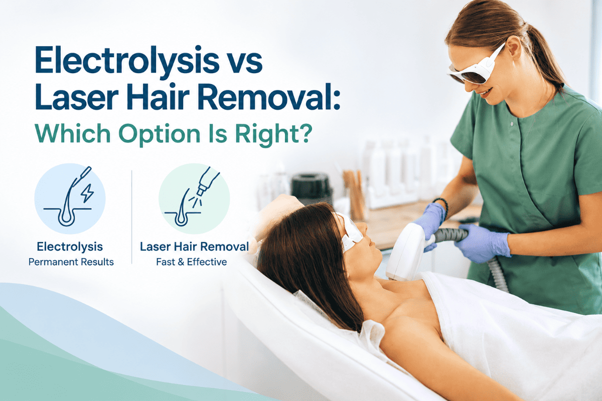
Not sure which hair-removal option fits your needs? Understanding how electrolysis and laser differ can help you choose the right approach for your hair, skin, and treatment area. For permanent facial hair removal, electrolysis can be a strong choice when lasting results are the priority.
Electrolysis vs Laser Hair Removal
Electrolysis and laser hair removal use different methods. With electrolysis, a very thin probe goes into each hair follicle. A small electrical current then destroys the cells that grow the hair. The treated hair is then removed.
Laser hair removal takes a different approach. Hair and skin color play a bigger part in how laser treatment works. Dark hair is considered the best fit for laser treatment.
Here is the main difference:
| Electrolysis | Laser Hair Removal |
| Treats each hair follicle | Treats unwanted hair with laser energy |
| Used for permanent hair removal | Used for long-lasting hair reduction |
| Works with all hair colors | Works best with dark hair |
| Works with all skin tones | Hair and skin contrast can affect suitability |
| Can treat small, specific areas | Can treat small and larger areas |
How Electrolysis Works for Permanent Hair Removal
An electrolysis permanent hair removal treatment starts with a consultation. The electrologist looks at the hair and talks with you about the area you want treated.
During treatment:
- A fine probe enters the hair follicle.
- A small electrical current is applied.
- The hair growth cells are destroyed.
- The treated hair is removed.
Three types of electrolysis are used: Shortwave or Thermolysis, Galvanic, and Blend. You need more than one treatment because hair grows in cycles. Not every hair is ready to be treated at the same time. Regular appointments can keep the area moving toward permanent clearance.
How Laser Hair Removal Works
Laser hair removal is used to reduce unwanted hair. It can be used on small areas, such as the upper lip, or larger areas, such as the legs and back.
Hair color is an important part of laser treatment. Dark hair is generally the best fit because laser treatment relies more on the difference between hair and skin color.
Laser can also be used before electrolysis in some cases. Reducing the amount of unwanted hair first can leave fewer individual hairs for electrolysis to treat.
Electrolysis for Different Skin and Hair Types
One of the key benefits of electrolysis is its wide range of hair and skin suitability. Electrolysis hair removal for all skin types can treat all skin tones. It can also treat:
- Light hair
- Dark hair
- Fine hair
- Coarse hair
- Curly or wavy hair
Electrolysis does not require a big difference between hair color and skin color. This makes it an option when hair color could make laser treatment less suitable.
Electrolysis and Laser for Dark Skin
When considering electrolysis or laser for dark skin, the difference between the two methods is important. Electrolysis works inside each hair follicle. It does not need a big difference between hair and skin color. Laser depends more on this contrast.
Dark skin can also be more likely to develop ingrown hairs, raised bumps, and dark spots. During an electrolysis assessment, the electrologist can ask about past scars, pierced ears, or vaccination scars. These details can show a tendency toward raised scars called keloids.
Temporary dark spots can happen after electrolysis. They often fade as the skin heals. Bleaching creams should not be used on treated skin because they can cause lighter spots.
Which Is Better for Facial Hair Removal?
For permanent facial hair removal, electrolysis can treat many areas, including:
- Chin
- Upper lip
- Eyebrows
- Jawline
- Throat
- Sides of the face
Facial hair can also change because of hormones. Hair on the chin and around the upper lip can become more noticeable during hormonal changes. Frequent tweezing can also cause skin irritation and ingrown hairs. Letting the hair grow out gives the electrologist access to the follicle for treatment.
Electrolysis removes the unwanted hair. It does not treat the cause of hormonal changes. If hair growth is sudden or unusual, a doctor or endocrinologist can check for an underlying cause.
Which Treatment Requires More Sessions?
Neither treatment has a fixed number of sessions. Electrolysis usually needs several appointments because hair grows in different stages. Treatment time depends on the hair, area, and growth cycle.
- The amount of hair
- The treatment area
- Your hair-growth cycle
- The electrolysis method being used
For example, eyebrows or ears usually take less time than a large area with heavy hair growth. People who have tweezed for a long time can also find it hard to know how much hair needs treatment. Hair must grow out before it can be treated, so an exact number of sessions cannot always be given at the start.
Choosing the Right Hair Removal Treatment
The right choice depends on what you need from treatment. Electrolysis can be a strong fit when:
- Permanent hair removal is the priority.
- You have light, dark, fine, or coarse hair.
- You have a skin tone that makes laser choice more complex.
- You want to treat a small or specific area.
Laser can be considered when dark hair and suitable hair-to-skin contrast make it a good fit. The best permanent hair removal method is not the same for every person. An individual assessment can show which approach fits your hair, skin, and treatment area.
Sensitive Skin Hair Removal Options
There are several Sensitive skin hair removal options, but treatment needs to match the area and the person’s needs. Electrolysis can treat delicate areas such as the breasts and areolas. It can also address unwanted hair that becomes ingrown after repeated shaving or tweezing.
The feeling during treatment differs from person to person. Some people describe electrolysis as a light tingling feeling. A topical anesthetic can also be suggested when needed.
After treatment, protect the area by:
- Avoiding strong sun and tanning beds.
- Not touching the area too much.
- Avoiding heavy sweating for 24 to 48 hours.
- Using the soothing antiseptic recommended by the electrologist.
Electrolysis and Laser as Complementary Treatments
Electrolysis and laser do not always need to be viewed as two completely separate choices. Laser can reduce unwanted hair over larger areas. Electrolysis can then focus on individual hairs that need permanent removal.
This approach can be useful when someone has a large amount of dark hair along with smaller areas that need detailed treatment. An assessment can determine whether one method or both make sense.
Electrolysis Consultation and Treatment Planning
A consultation looks at your specific hair and skin needs. The first appointment includes a discussion about your hair-removal needs and an assessment of your hair type. An initial treatment can also be shorter. This gives the electrologist a chance to see how your skin reacts. A health history can be useful when hair growth is sudden or unusual. Questions can include:
- Medications
- Family history
- Thyroid concerns
- Diabetes
- Menstrual or ovarian concerns
For people searching for a certified Laser and electrolysis consultation, experience and professional standards are important factors. Ashlee Combs has more than 10 years of experience in electrolysis and laser hair removal. Londa Combs has more than 17 years of electrolysis experience. The practice also follows infection-prevention, sanitation, and sterilization standards.
Book Your Hair Removal Consultation
Not sure which is better: electrolysis or laser hair removal for you? A personal assessment can give you a clearer answer based on your hair, skin, and treatment area. Electrolysis Center Laser Hair Removal offers complimentary consultations to discuss your needs and find the right treatment approach.
FAQs
Q1: What is the difference between electrolysis and laser hair removal?
Electrolysis treats individual follicles with a fine probe and electrical current. Laser uses a different method to reduce unwanted hair and works best with dark hair
Q2: Which hair removal method provides permanent results?
Electrolysis is used for permanent hair removal. It treats individual follicles and destroys hair growth cells. Several treatments are needed because hairs grow through different cycles.
Q3: Is electrolysis better than laser hair removal for facial hair?
Electrolysis can suit people who want permanent facial hair removal. It can treat areas such as the chin, upper lip, eyebrows, jawline, and throat.
Q4: Can electrolysis treat light, blonde, gray, or red hair?
Yes. Electrolysis can treat different hair colors, including light and dark hair. It also works with fine and coarse hair without relying on hair and skin contrast.
Q5: Is laser hair removal suitable for every skin tone?
Laser suitability depends partly on hair and skin contrast. Electrolysis does not need a strong color difference, so it can treat all skin tones
