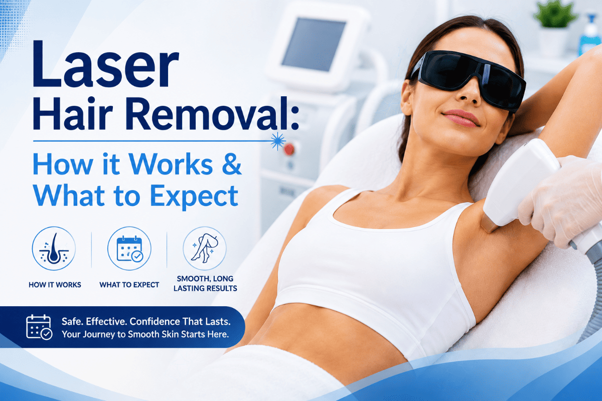
Laser Hair Removal is a popular treatment for reducing unwanted hair growth for a longer time. It uses focused light energy to target melanin, the pigment inside hair, and damage the follicle that produces hair. At Electrolysis Center Laser Hair Removal, both laser and electrolysis options are available for different hair and skin needs.
The treatment works best when hair is actively growing, so several sessions are usually needed. Laser treatment mainly provides long-term hair reduction, while electrolysis focuses on permanent hair removal for different hair colors and skin types.
- Laser Hair Removal: Best suited for reducing darker hair on larger areas when there is suitable contrast between the hair and skin.
- Electrolysis: Designed for permanent hair removal and can treat light, grey, white, and red hair because it does not depend on pigment.
What Is Laser Hair Removal?
Laser Hair Removal Definition
Laser hair removal is a treatment that uses controlled light energy to reduce unwanted hair growth. The laser targets pigment in the hair, allowing the energy to reach the follicle and slow future growth.
Unlike shaving or waxing, which remove hair from the skin surface, laser treatment works deeper by affecting the hair follicle. Results differ for each person because hair color, skin type, growth patterns, and the treatment area all matter.
How Does Laser Hair Removal Work?
How Laser Hair Removal Works is based on the way hair pigment responds to light energy. During treatment, laser energy is directed toward the hair follicle. The pigment in the hair absorbs this energy and changes it into heat. The heat then damages the follicle and reduces its ability to produce new hair.
Hair grows in different stages. The laser works best when hair is in its active growth stage. Since not all hairs are active at the same time, several treatments are needed.
Common treatment areas include:
- Face
- Upper lip
- Chin
- Underarms
- Arms
- Legs
- Bikini line
- Back
- Chest
What to Expect During a Laser Hair Removal Treatment
Knowing what to Expect During Laser Hair Removal can make the process feel more comfortable. Each appointment starts with an assessment of the skin and hair. The treatment area is then prepared before the laser is used.
| Step | What Happens |
| Consultation | Skin type, hair type, and treatment needs are reviewed |
| Preparation | The area is shaved and cleaned |
| Protection | Appropriate eye and skin protection is used |
| Laser treatment | Light energy is directed toward the hair follicles |
| Cooling | Cooling methods can reduce heat and discomfort |
| Aftercare | Skin care instructions are given |
| Follow-up | Future appointments are planned according to hair growth |
Before treatment, avoiding sun exposure is generally recommended. Waxing and tweezing should also be avoided because they remove the hair from the follicle. Shaving is preferred because the hair root remains in place for the laser to target.
The Science Behind Laser Hair Removal
Laser treatment uses a process called selective photothermolysis. In simple terms, the laser sends energy toward the pigment in the hair. The pigment absorbs the energy and changes it into heat.
That heat affects the follicle and reduces its ability to produce hair. However, one session cannot treat every hair at the same stage of growth. Some hairs are active, while others are resting.
For this reason, repeated treatments are part of the process. With several appointments, more hairs can be treated during their active growth stage. The result is usually a gradual reduction in unwanted hair.
Benefits and Limitations of Laser Hair Removal
Benefits
Laser treatment can offer several practical benefits:
- Reduces unwanted hair growth for a longer period
- Covers large areas faster than hair-by-hair treatment
- Reduces the need for frequent shaving
- Can provide smoother-looking skin
- Usually involves little downtime
- Can fit into a regular personal care routine
Limitations
Laser treatment also has some limits:
- It works best when the hair contains enough pigment
- White, grey, blonde, and very light hair can be harder to target
- Several sessions are normally needed
- Some people need maintenance treatments
- Temporary redness or irritation can occur
Frequently Asked Questions
Q1: Can laser hair removal remove white or grey hair?
Laser treatment often struggles with white and grey hair because these hairs contain little pigment. Electrolysis can be considered when unwanted hair has little or no visible pigment.
Q1: How many laser hair removal sessions are needed?
The number varies by person. Several sessions are usually needed because hair grows in different cycles. The area, hair type, and individual response also affect treatment timing.
How to Prepare for Laser Hair Removal
Good preparation can support a smoother treatment experience. Before an appointment:
- Avoid direct sun exposure
- Shave the treatment area as instructed
- Avoid waxing, threading, and tweezing
- Avoid tanning products
- Share relevant medication information during consultation
- Follow the specific preparation instructions provided
After treatment, protect the skin from strong sun exposure. Sunscreen and gentle skin care can also be useful. Avoid excessive heat and follow the aftercare instructions given after the session.
Frequently Asked Questions
Q1: Does laser hair removal hurt?
Most people describe the feeling as a quick snapping or pinching sensation. Comfort differs by person and treatment area. Cooling methods can make the session more comfortable.
Q1: What should I do before laser hair removal?
Avoid sun exposure, waxing, and tweezing before treatment. Shaving is generally preferred. Keep the skin clean and follow all instructions given during the consultation.
Laser Hair Removal vs. Electrolysis: Which Is Right for You?
Both treatments target unwanted hair, but they work in different ways. Laser treatment uses light energy and hair pigment, while electrolysis treats individual follicles with a fine probe and electrical current.
| Feature | Laser Hair Removal | Electrolysis |
| Result | Long-term hair reduction | Permanent hair removal |
| Hair color | Works best with darker hair | Works with all hair colors |
| Treatment style | Covers larger areas | Treats individual follicles |
| Sessions | Multiple treatments | Multiple treatments |
| Best suited for | Larger areas | Permanent removal needs |
A Laser and electrolysis consultation can be useful when someone is unsure which option fits their hair color, skin type, treatment area, and desired result.
Frequently Asked Questions
Q1: Is laser hair removal better than electrolysis?
Neither treatment is best for everyone. Laser can suit larger areas with darker hair, while electrolysis can treat individual hairs of different colors for permanent removal.
Q1: Does laser work on every skin type?
Treatment suitability depends on skin characteristics and the technology used. A professional assessment can identify an appropriate approach and reduce the risk of unwanted skin reactions.
Is Laser Hair Removal Right for You?
Laser treatment can suit people who:
- Want long-term reduction of unwanted hair
- Have darker hair with visible pigment
- Want to treat larger body areas
- Can attend several appointments
- Are ready to follow preparation and aftercare instructions
Another option is Electrolysis permanent hair removal treatment when:
- Hair is white, grey, blonde, or red
- Permanent removal is the main priority
- Small areas need precise treatment
- Individual follicles need to be treated
For people considering Laser hair removal, the same basic principles apply. Areas such as the back, chest, shoulders, neck, and other body areas can be assessed based on hair type and treatment needs.
Frequently Asked Questions
Q1: Can laser hair removal treat facial hair?
Yes. Laser treatment can be used on areas such as the upper lip, chin, and other facial areas. Results depend on hair color, hair thickness, skin type, and the treatment plan.
Q1: How long do laser hair removal results last?
Results vary between people. Laser treatment can provide long-term hair reduction, but some hair can return over time. Maintenance sessions can sometimes be needed.
Common Laser Hair Removal Myths and Facts
| Myth | Fact |
| One session removes all hair | Several treatments are needed because hair grows in cycles |
| Laser works on every hair color | Darker hair generally responds better because it contains more pigment |
| Laser is extremely painful | Many people describe the sensation as mild and brief |
| Shaving makes hair thicker | Shaving does not change the actual thickness of hair |
The number of Laser hair removal sessions is based on factors such as the treatment area, hair growth cycle, hair color, and individual response. A treatment plan should therefore be based on the person rather than a fixed number.
Choosing the Right Treatment and Consultation
A Laser hair removal consultation gives the practitioner a chance to review the skin, hair, treatment area, and expected results before treatment begins.
For people seeking broader Permanent hair removal services, electrolysis can be considered when the hair color or desired outcome makes laser less suitable. The right choice depends on the person’s needs rather than using one method for everyone.
Ready to Explore the Right Hair Removal Solution?
Choosing between laser and electrolysis starts with understanding your hair, skin, and desired results. Electrolysis Center Laser Hair Removal offers personalized laser hair removal treatment based on individual needs. A consultation can help determine the right option.
