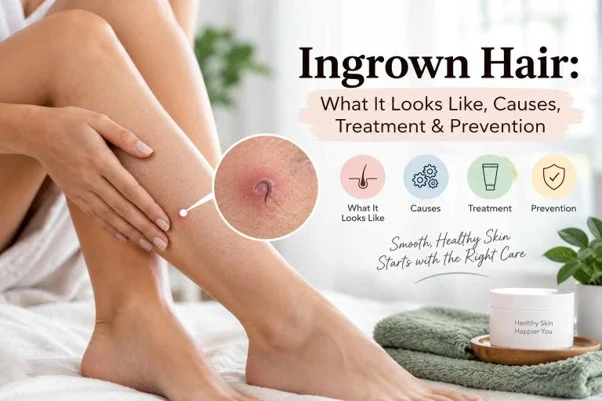
Ingrown hairs can leave your skin red, itchy, sore, or bumpy after shaving, waxing, or tweezing. An ingrown hair treatment plan starts by calming the skin and stopping further irritation. For repeated bumps, changing the way unwanted hair is removed can also make a lasting difference.
What Is Ingrown Hair?
An ingrown hair happens when a hair curls or grows back into the skin instead of growing out through the surface. The trapped hair can cause a small bump, redness, itching, tenderness, or swelling.
How Does Ingrown Hair Develop?
Hair grows from a follicle under the skin. After removal, the new hair should grow outward. Sometimes it curls sideways or back into the skin.
This is more common with curly or coarse hair. Shaving, waxing, and tweezing can also contribute. Once trapped, the hair can irritate the skin and cause inflammation. Repeated irritation can leave bumps, dark marks, or, in some cases, infection.
Areas Commonly Affected
- Face and neck
- Chin and jawline
- Underarms
- Legs
- Bikini line
- Pubic area
- Chest
- Back
What Does Ingrown Hair Look Like?
Recognizing an ingrown hair on the skin can keep you from picking or squeezing the area. The first sign is often a small raised bump where hair was removed. It can look red or feel itchy and tender.
The area can change as irritation increases:
| Stage | What Happens |
| Hair removal | Shaving, waxing, or tweezing removes the visible hair. |
| Hair regrowth | A new hair starts growing from the follicle. |
| Hair becomes trapped | The hair curls or grows back into the skin. |
| Skin reaction | A red, raised, itchy, or sore bump can appear. |
| Inflammation | Swelling, redness, and tenderness can increase. |
| Possible infection | Pus, severe pain, or spreading redness can occur. |
| Healing | Mild cases can improve when irritation stops. |
A painful ingrown hair with increasing swelling, pus, or spreading redness needs closer attention.
The Science Behind Ingrown Hair
Normal hair growth moves outward from the follicle through the skin. An ingrown hair takes a different path. It curves back or grows sideways under the surface.
Curly and coarse hair can have a stronger tendency to bend toward the skin. Shaving can also change the end of a hair as it grows back.
The trapped hair can trigger inflammation. This can cause:
- Redness
- Small bumps
- Itching
- Tenderness
- Swelling
- Dark marks
Repeated hair removal can add more irritation, especially in areas that already develop bumps easily.
Treatment Options and Limitations for Ingrown Hair
Benefits of Proper Ingrown Hair Care
Good skin care can reduce irritation while the area heals.
- Reduces rubbing and irritation
- Keeps the area clean
- Supports normal healing
- Limits picking and scratching
- Can reduce repeated inflammation
- Supports better hair-removal habits
Limitations of Ingrown Hair Treatment
Home care is not right for every case.
- Severe or infected bumps can need professional evaluation.
- Picking can increase irritation and scarring.
- Dark marks can remain after the bump heals.
- Recurring bumps can return if the same hair-removal routine continues.
- Results differ with hair type, skin type, and hair-growth patterns.
How to Treat and Prevent Ingrown Hair
Before Your Appointment
If you often develop ingrown hairs, take steps to avoid more irritation.
- Do not pick, squeeze, or dig into the bump.
- Pause hair removal over irritated skin.
- Keep the area clean.
- Avoid tight clothing over the affected area.
- Tell your practitioner about recurring bumps.
- Discuss your usual shaving, waxing, or tweezing routine.
Aftercare Tips
Once the skin is being treated or has been irritated, gentle care matters.
- Keep the area clean and moisturized.
- Avoid scratching or picking.
- Use gentle exfoliation when suitable.
- Do not shave over irritated skin.
- Reduce rubbing and friction.
- Follow your practitioner’s aftercare directions.
Does Treating an Ingrown Hair Hurt?
A mild ingrown hair can feel sore, itchy, or tender because the skin is inflamed. Picking it can make the discomfort worse. Professional treatment can feel different depending on the area, treatment type, severity, and personal sensitivity.
Ingrown Hair Treatment vs. Long-Term Hair Removal: Which Is Right for You?
Home care and professional hair removal serve different purposes. Home care focuses on calming a current bump. Professional hair removal focuses on reducing unwanted hair that keeps leading to the same problem.
Electrolysis for ingrown hairs can be considered when unwanted hair and repeated ingrown hairs continue to be a concern.
| Feature | At-Home Care | Professional Hair Removal |
| Main purpose | Calm mild irritation | Address recurring unwanted hair |
| Best for | Occasional bumps | Frequent ingrown hairs |
| Approach | Gentle skin care | Professional hair-removal treatment |
| Time needed | Depends on healing | Depends on treatment and hair cycle |
| Long-term focus | Better skin-care habits | Reducing unwanted hair over time |
Is Professional Ingrown Hair Treatment Right for You?
You May Benefit From Professional Guidance If…
Professional care is worth considering when ingrown hairs keep coming back.
- Bumps appear often after hair removal.
- The same area becomes irritated again and again.
- Ingrown hairs leave dark marks.
- You struggle to manage recurring bumps.
- You want a longer-term hair-removal option.
Consider Professional Evaluation If…
Some signs need more attention than basic home care.
- Pain keeps getting worse.
- The area becomes very swollen.
- Pus develops.
- Redness starts spreading.
- Scarring or lasting skin changes appear.
Read More : What Should You Avoid Before and After Electrolysis?
Common Ingrown Hair Myths and Facts
| Myth | Fact |
| Every shaving bump is an ingrown hair. | Other skin problems can look similar. |
| Squeezing makes a bump heal faster. | Picking can increase irritation and scarring. |
| Only shaving causes ingrown hairs. | Waxing and tweezing can also contribute. |
| Every ingrown hair disappears quickly. | Mild cases can take time to settle. |
| Strong exfoliation prevents all bumps. | Too much exfoliation can irritate the skin. |
Ready to Find the Right Solution for Recurring Ingrown Hairs?
Recurring ingrown hairs deserve more than repeated shaving and tweezing. A personal assessment can look at your hair type, skin characteristics, treatment area, and pattern of recurring bumps.
Electrolysis Center Laser Hair Removal provides electrolysis and laser hair-removal services with personalized treatment planning. If you are searching for the Best electrolysis center near you, a consultation can show which approach fits your needs.
Ask about available options, including full-body laser hair removal packages, when larger treatment areas are part of your plan.
Read More : Does Electrolysis Hurt? What to Expect During Your First Treatment
FAQs
Q1: How do you know if you have ingrown hair?
A small red or raised bump after hair removal can be an ingrown hair. It might itch, feel tender, or show trapped hair beneath the skin. Pus, spreading redness, or increasing pain can signal infection and needs professional attention.
Q2: What does ingrown hair look like?
An ingrown hair often looks like a small red, swollen, or raised bump. The area can feel itchy or sore. Sometimes, the curled hair is visible beneath the skin. Persistent bumps can look similar to other skin conditions, so evaluation can be useful.
Q3: What causes ingrown hairs?
Ingrown hairs happen when a growing hair curls back or grows sideways into the skin. Shaving, waxing, tweezing, and repeated hair removal can contribute. Curly or coarse hair can also be more likely to bend back toward the skin and become trapped.
Q4: How do you treat an ingrown hair?
Avoid squeezing, picking, or digging at the area. Keep the skin clean and reduce further irritation. Gentle care can allow mild bumps to settle. If pain, swelling, pus, spreading redness, or repeated bumps occur, professional evaluation is appropriate.
Q5: How can you prevent ingrown hairs after shaving?
Use careful shaving habits and avoid shaving irritated skin. Keep the area clean, reduce friction, and avoid picking at new bumps. Gentle exfoliation can suit some people. If shaving repeatedly causes ingrown hairs, consider another long-term hair-removal approach.
Q6: Can waxing cause ingrown hairs?
Yes. Waxing removes hair from the follicle, and new growth can sometimes curl back into the skin. Repeated waxing can also irritate sensitive areas. If bumps keep returning after waxing, changing your hair-removal method can be worth considering.
Q7: Can electrolysis help with recurring ingrown hairs?
Electrolysis treats individual hair follicles and permanently removes unwanted hair from treated follicles. For people with recurring ingrown hairs, reducing the unwanted hair can address one factor behind repeated bumps and irritation. Treatment is planned around the person’s hair and skin needs.
