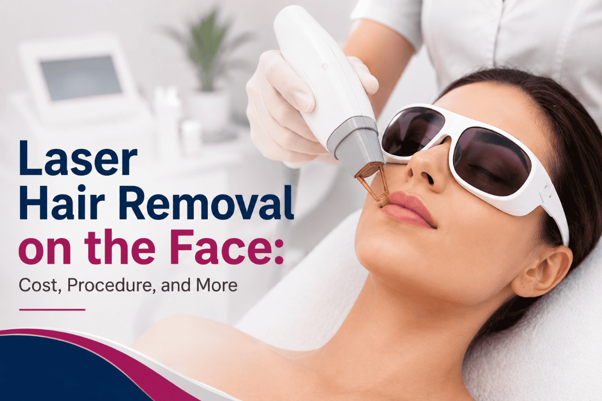
Facial hair can be treated in several ways, but laser treatment and electrolysis work in different ways. Laser Hair Removal on the Face uses light energy to target pigment in the hair and reduce future growth. It can be useful for darker facial hair and larger areas.
The process usually takes several sessions because facial hair grows at different times. Results also depend on hair color, skin type, hormones, and the treatment method used. Laser usually provides long-term hair reduction rather than guaranteed permanent removal. Electrolysis treats individual follicles and can work on hair of different colors.
What Is Laser Hair Removal on the Face?
Facial Laser Hair Removal Definition
Facial laser hair removal uses focused light energy to target unwanted hair. The pigment in the hair absorbs the light. This creates heat that affects the hair follicle and reduces its ability to produce new hair.
How Does Laser Hair Removal Work on Facial Hair?
The laser looks for melanin, or pigment, in the hair. When the hair absorbs the energy, heat reaches the follicle. Hair in the active growth stage responds best.
Because facial hairs are not all growing at the same time, several appointments are needed. Darker hair usually responds better because it contains more pigment. Very light, white, and grey hairs are harder for laser to target.
Common treatment areas include:
- Upper lip
- Chin
- Cheeks
- Sideburns
- Jawline
- Neck
- Beard line
- Full face
What to Expect During a Facial Laser Hair Removal Appointment
A facial session begins with an assessment of the skin and hair. The treatment area is then prepared before laser energy is applied. Knowing the basic steps can make the appointment feel less uncertain.
| Step | What Happens |
| Consultation | Skin, hair, and treatment needs are reviewed |
| Skin Test | A patch test can be performed when appropriate |
| Preparation | The area is cleaned and prepared |
| Eye Protection | Protective eyewear is used |
| Laser Treatment | Pulses of light target pigmented hair |
| Cooling | Cooling can reduce heat and discomfort |
| Aftercare | Skin care and sun protection are discussed |
| Follow-Up | Future sessions are planned around hair growth |
A facial session is usually fairly quick because the treatment area is smaller than areas such as the legs or back.
Read More :- Ingrown Hair: What It Looks Like, Causes, Treatment & Prevention
The Science Behind Facial Laser Hair Removal
Laser hair removal uses a process called selective photothermolysis. In plain terms, the laser sends energy toward the hair pigment. The pigment absorbs that energy and changes it into heat.
That heat affects the follicle during its active growth stage. Hair then enters other stages, so one session cannot treat every follicle equally.
This explains why repeated sessions are part of a facial treatment plan. Hormonal changes can also affect facial hair growth, so some people need maintenance treatments later.
Frequently Asked Questions
Q1: Is laser hair removal safe for the face?
When performed by a properly trained professional, facial laser hair removal is generally considered safe. Temporary redness, swelling, or irritation can occur after treatment and usually settles with proper care.
How Much Does Laser Hair Removal on the Face Cost?
There is no single price for facial treatment. The final cost depends on the treatment plan and the amount of work needed.
Factors that can affect cost include:
- Size of the area being treated
- Number of sessions needed
- Hair thickness and growth pattern
- Technology used
- Provider experience
- Location
For example, treating the upper lip is different from treating the full face. A person with dense hair can also need a different treatment plan from someone with light, sparse growth.
When comparing laser hair removal consultations, it is useful to ask what the quoted price includes and how future sessions are handled. Healthline reports that facial laser treatment commonly costs hundreds of dollars per session, but prices vary by provider and location.
Benefits and Limitations of Facial Laser Hair Removal
Benefits
Facial laser treatment can offer several practical benefits:
- Long-term reduction in unwanted hair
- Quick treatment for larger facial areas
- Less need for frequent shaving or waxing
- Little downtime for most people
- Smoother-looking skin over time
Limitations
Laser treatment is not the same as permanent follicle-by-follicle removal. It also works less effectively when hair has little or no pigment.
Other points to consider include:
- Several sessions are needed
- Maintenance can be needed
- Results differ between people
- Temporary redness can occur
- Hormonal facial hair can return
Frequently Asked Questions
Q2: How much does laser hair removal on the face cost?
Cost varies by area, provider, technology, and number of sessions. A small area such as the upper lip generally requires less treatment than the full face.
Laser Hair Removal vs. Electrolysis for Facial Hair
Both treatments can reduce unwanted facial hair, but their methods are different.
| Feature | Laser Hair Removal | Electrolysis |
| Main result | Long-term reduction | Permanent hair removal |
| Hair color | Best with pigment | Works with all hair colors |
| Treatment style | Treats many hairs at once | Treats follicles one at a time |
| Speed | Faster for larger areas | Slower for larger areas |
| Light hair | Limited response | Suitable |
| Best use | Larger areas with darker hair | Individual hairs and permanent removal |
For someone seeking Facial hair removal electrolysis treatment, electrolysis can be considered when individual hairs need permanent removal, especially when those hairs are too light for laser. Electrolysis is described as permanent hair removal and can treat different hair colors and skin tones.
Frequently Asked Questions
Q1: Is electrolysis better than laser hair removal for facial hair?
Neither treatment is best for everyone. Laser can reduce darker facial hair over larger areas, while electrolysis can permanently treat individual hairs of different colors.
How to Prepare for Facial Laser Hair Removal and Care for Your Skin After Treatment
Before treatment, the skin should be kept in good condition. Sun exposure should be limited, and waxing or tweezing should generally be avoided because these methods remove the hair from the follicle.
Before an appointment:
- Shave as instructed
- Arrive with clean skin
- Remove makeup from the treatment area
- Avoid tanning
- Tell the practitioner about medicines
- Follow personalized instructions
After treatment, protect the skin from direct sun and use sunscreen. Avoid excessive heat and harsh skin products until the skin settles. Do not pick or scratch the treated area.
Frequently Asked Questions
Q3: What should I expect after facial laser hair removal?
Mild redness, swelling, or tenderness can occur. The skin usually settles quickly, while treated hairs shed over time. Sun protection is important after treatment.
Is Facial Laser Hair Removal Right for You?
Laser can be worth considering when the main concern is darker facial hair and long-term reduction. A proper assessment is especially useful when skin tone, hair color, or hormonal growth could affect the result.
Electrolysis can be considered instead when the hair is white, grey, blonde, or red, or when permanent removal of individual hairs is the priority.
Frequently Asked Questions
Q4: How many laser hair removal sessions are needed for facial hair?
Several sessions are usually needed because facial hairs grow in different stages. The exact number depends on hair growth, treatment area, skin type, and individual response.
Q5: Can laser hair removal treat upper lip and chin hair?
Yes. The upper lip and chin are common treatment areas. The response depends on the hair’s pigment, thickness, growth cycle, skin type, and treatment settings.
Common Myths About Facial Laser Hair Removal
| Myth | Fact |
| One session removes every hair | Several sessions are normally needed |
| Laser works on every hair color | Pigmented hair responds better |
| Laser always removes facial hair forever | It mainly provides long-term reduction |
| Treatment is always very painful | Sensation varies by person and area |
Looking for the Right Facial Hair Removal Solution?
Choosing between laser and electrolysis starts with understanding the hair, skin, treatment area, and desired result. A professional assessment can show which approach fits those needs.
Electrolysis Center Laser Hair Removal provides laser and electrolysis services for different hair removal needs. A consultation can compare the available options and create a treatment plan based on individual characteristics.
For people seeking a Permanent facial hair removal clinic, discussing both treatment options can be a useful first step.
Frequently Asked Questions
Q6: Does laser hair removal permanently remove facial hair?
Laser hair removal is generally considered a long-term hair reduction treatment rather than guaranteed permanent removal. Facial hair can regrow, especially when hormones affect future hair growth.
Q7: Does facial laser hair removal work on white or grey hair?
Laser depends on hair pigment, so white and grey hair often respond poorly. Electrolysis does not rely on pigment and can treat these lighter hairs individually.
